Boedi Widjaja: Rivers and Lakes Redux
History takes up space, materialized in landscape and body, through which Boedi Widjaja reads nature as an archive. He inscribes memory and trauma in the embodied scripts of genes and genealogies, tracing dispersal, mutation, and translation as marks of survival. Mirroring natural migration and biological processes, his multimodal practice unfolds as a diasporic sensorium.
In this presentation, Boedi extends these explorations into the genetic and cinematic languages of his multicultural memory. Ranging from DNA molecular poetry and nano-biosculpture to drawing, performance, and film, the exhibition debuts two new works created in collaboration with geneticist A/Prof. Eric Yap (Institute for Digital Molecular Analytics and Science, Singapore), presented alongside earlier pieces. Together, the works evoke an ecology of memory, fractured yet generative, where diaspora remaps space and body into new continuities, and where “nature” and “origin” are revealed as synthetic, composed of memory, technology, and the ever-elusive desire for return.
This presentation is supported by the National Arts Council (Creation Grant), the Institute for Digital Molecular Analytics and Science, and the NTU Museum, Singapore.
Rivers and Lakes Redux
Text by Liu Shuo · Translated from the Chinese by Chantel Shiah
First published as 《黄晨晗:新江湖水土》↗ by ShanghART, 2 January 2026
The figure of the one-armed swordsman recedes into the surface of the paper. Along the walls, traced silhouettes of wuxia combat hover like residual images, neither fully present nor entirely gone. From time to time, the ring of a bell ripples through the space, enveloping the intervals between monologues and drawing a “history of absence” into being—one that unfolds slowly, almost imperceptibly.
Born in 1975 in Solo, Indonesia, to ethnic Chinese parents, Boedi Widjaja moved to Singapore at the age of nine without his family and has not returned to his birthplace for any extended period since. His early encounters with Chinese culture was primarily through pirated VHS wuxia films, family stories, and a narrow selection of Mandarin textbooks. What reached him was delayed, piecemeal and filtered through layers of translation and loss. Unable to fully comprehend Mandarin, he nonetheless watched Cantonese and Taiwanese films from the 1960s and 70s, absorbing their gestures, rhythms, and moral worlds without access to their language. While living with a host family in Singapore, he was introduced to Dream of the Red Chamber and Water Margin, but similarly found himself unable to enter these texts due to linguistic constraints.
This mode of encounter situated his understanding of “ancestral culture” largely within mediated forms. What emerged was a condition defined by speculation and absence: a homeland never directly experienced, a history without a mother tongue to anchor it, and no continuous narrative to inhabit. This absence is not merely psychological, but a cognitive condition jointly shaped by migration and racial repression—specifically the restrictions imposed on Chinese culture in Indonesia after 1965.
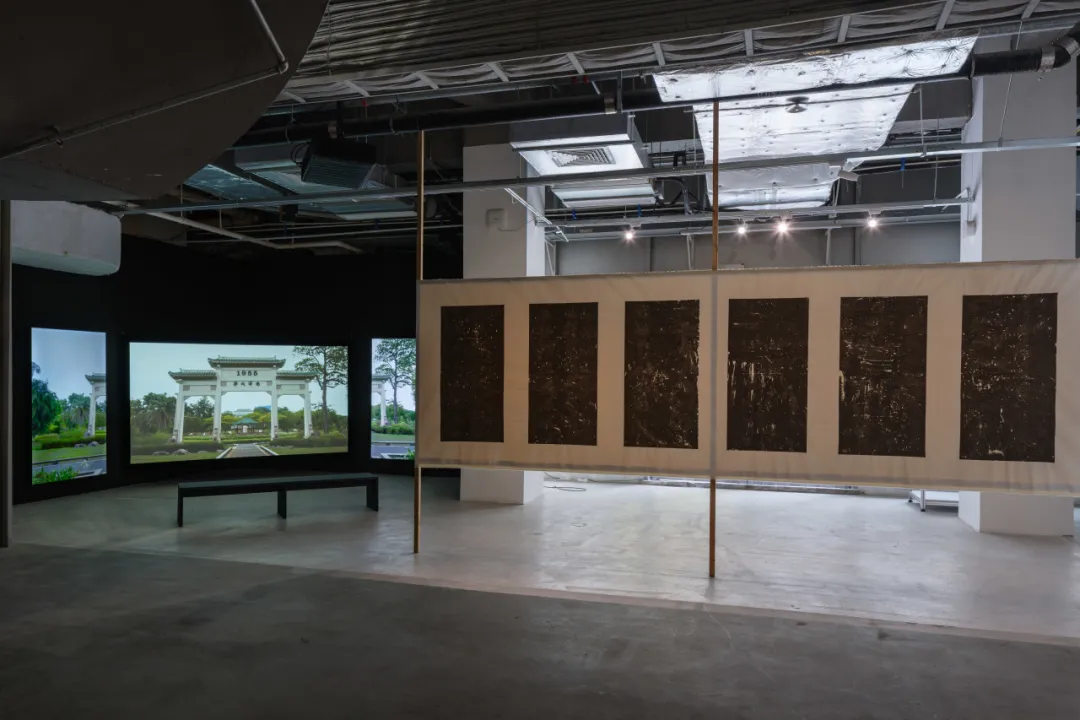
Installation view, The View within the View — Boedi Widjaja: Rivers and Lakes Redux, ShanghART West Bund Central
Yet it is precisely from this absence that this presentation begins. Rather than attempting to recover an authentic Huaxia or a coherent Jianghu, Boedi traces how diasporic experience endures through gaps, mistranslations, and mis-recognitions. “Absence” becomes a point of movement, a ticket toward a homeland formed through fabulation and imagination. As an elderly man recites four brief lines of poetry in English and Indonesian—“Rivers and Lakes / Tanah dan air / Land and water / Sungai sejarah”—the homeland has already slipped its coordinates, reappearing instead as an imaginative terrain, sustained by memory, distance, and longing.
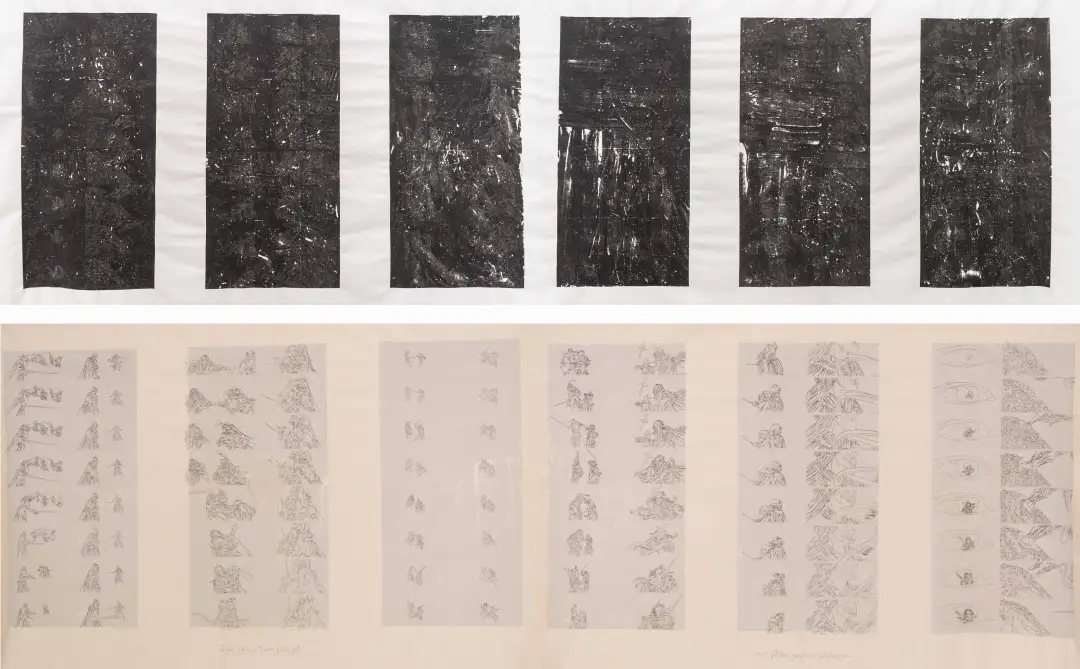
Boedi Widjaja, Imaginary Homeland: kang ouw (二上), 2018. Charcoal and gel medium on wood and cloth, 160 (H) × 500 cm
In the presentation “Rivers and Lakes Redux,” Imaginary Homeland: kang ouw (二)reimagines the duel from the film Sword Master (2016)on a five-meter-long canvas. Suspended like a folding screen in the center of the space, the work presents twelve black, shadow-like columns bearing faint, ghostly images on one face, while the reverse reveals tracings of the duel across shifting landscapes. Although these scenes are drawn from an imagined Huaxia Jianghu, they are inscribed in ancient Javanese script, Hanacaraka. The text is drawn from a four-line pangrammatic poem that narrates the duel of two warriors, echoing the climax of the film: Yan Shisan strikes fatally, ending the fight, while Xie Xiaofeng relinquishes his weapons and withdraws from the martial world into ordinary life. Reflecting upon this, a minor character comments, “What is Jianghu? It’s merely a place where those unwilling to be ordinary torment one another.” Resonating with Boedi’s experiences, this comment frames diasporic identity as a Jianghu-like journey—shaped by flux, ambiguity, and continual striving—in which speculation and struggle ultimately give way to a longing for home.
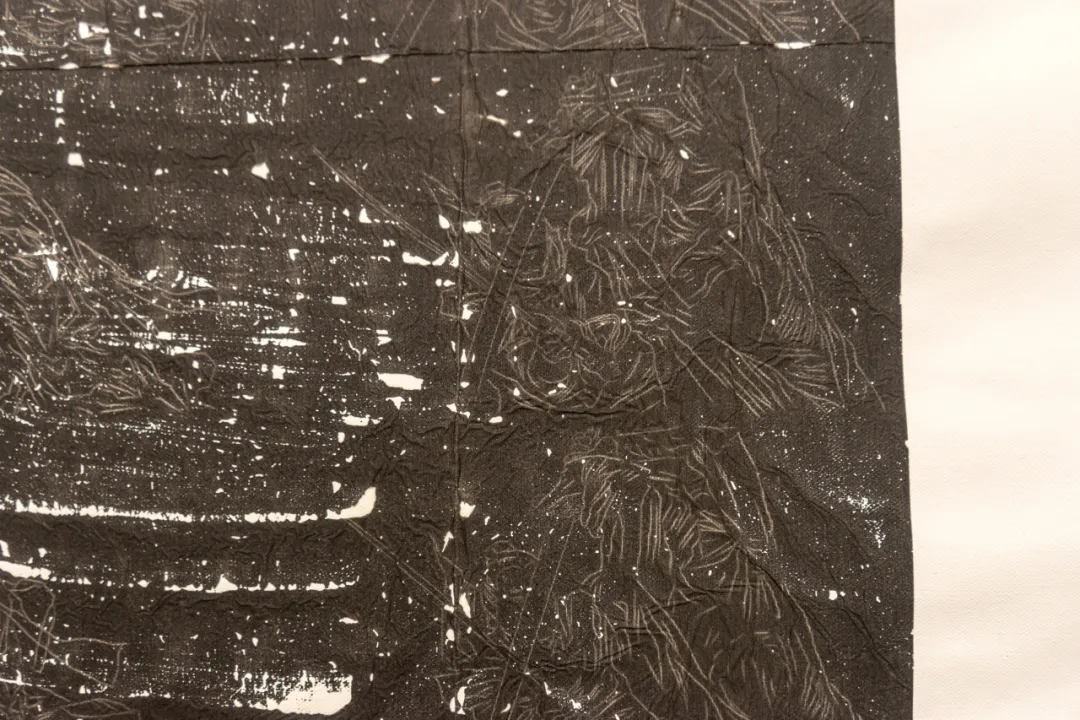
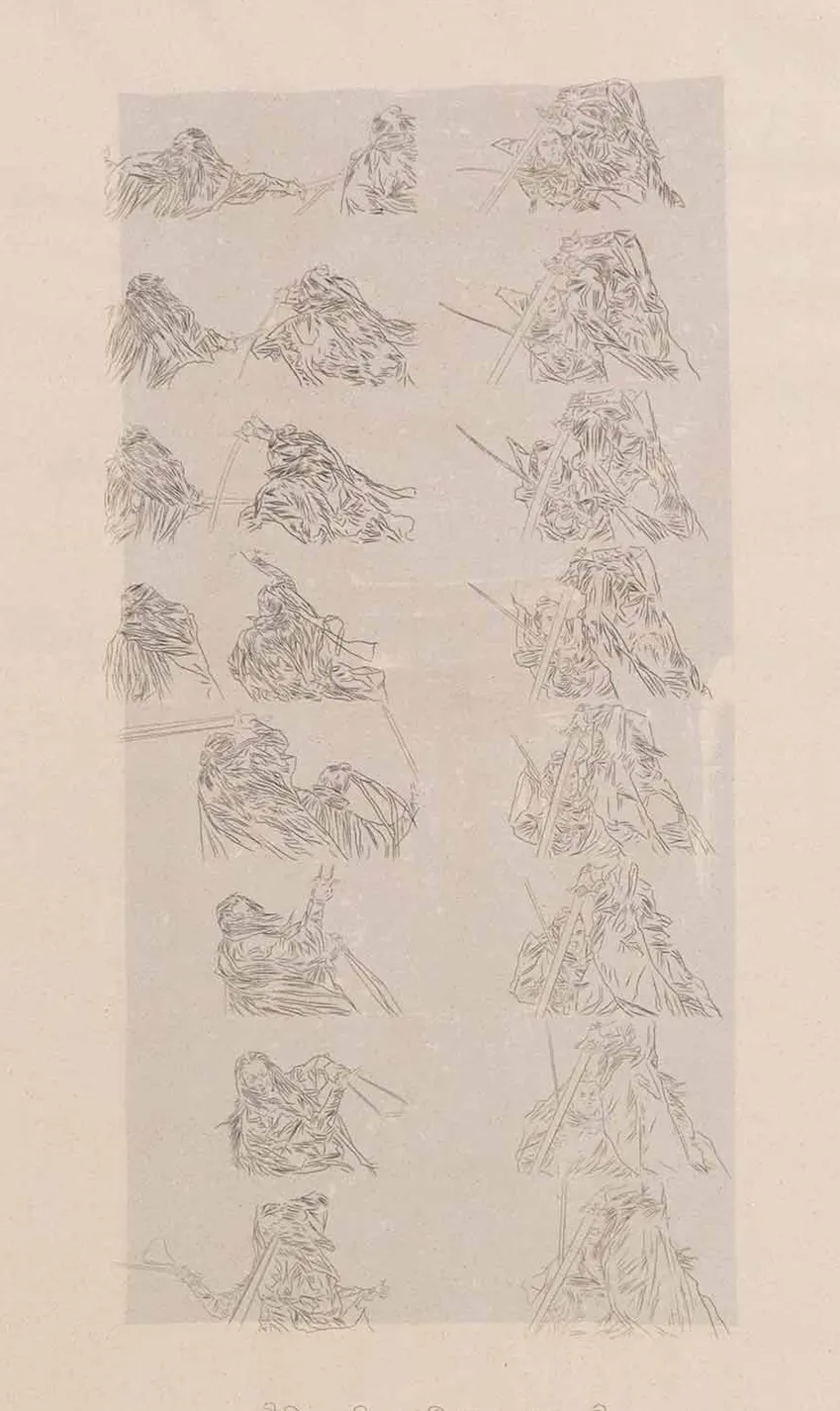
Boedi Widjaja, Imaginary Homeland: kang ouw (二上), details
The Imaginary Homeland series originates from Boedi’s childhood fascination with wuxia films. He first stepped into this otherworldly realm through pirated VHS tapes his uncle had rented in Indonesia during the 1980s. Though he could not fully understand Mandarin, he was mesmerized by the choreography, the sounds, and the intangible energy that pulsed through the screen. This formative experience of “misreading” became a guiding motif in his later practice.
“Kang ouw” comes from the Hokkien pronunciation of jianghu, adapted into Dutch spelling, and was commonly used within the Chinese-Indonesian community. Aligning with the themes inherent inJianghu, Boedi’s work foregrounds duality, exploring the interplay of opposing tensions and intertwined realities. This is especially evident in One and a Half, an interactive work for mobile devices, where opposites—positive and negative, visible and invisible, Chinese and Javanese, film and text—coexist and engage with one another. It also articulates the search for a voice formed in the absence of a mother tongue, emerging from the fractures between multiple languages.
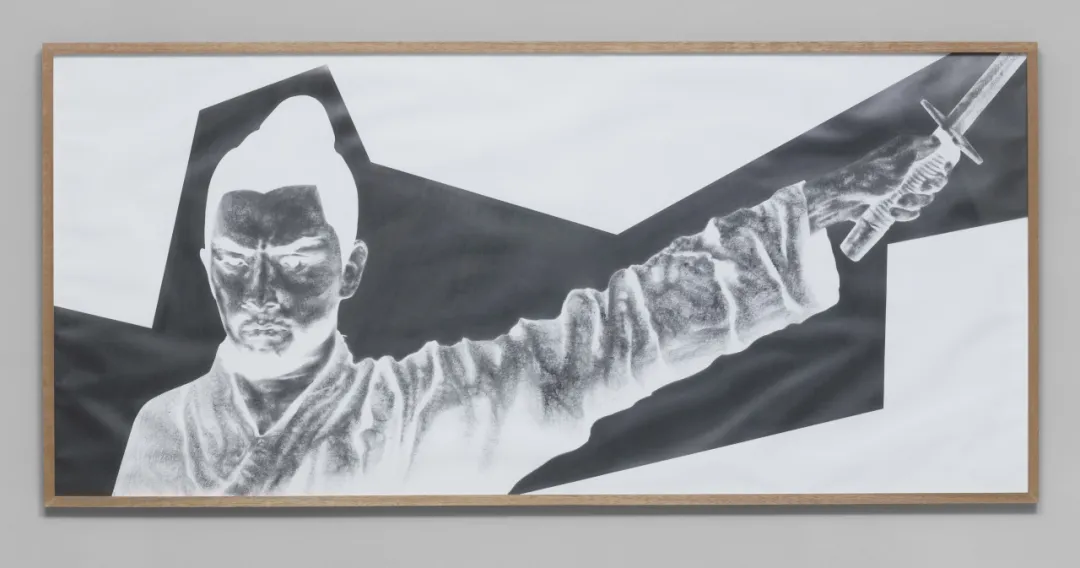
Boedi Widjaja, One and a Half, 2013. Graphite on paper, 91.5 (H) × 200 cm
In this series, tracing becomes a connective practice through which the duality of Jianghu is revealed. Boedi reflects, “In a sense, tracing embodies both memory and imagination—this method suggests a continuity between past and future, or draws a line through time.” Hand-tracing carries with it the inevitable loss of certain details from the original. The film stills he selects for tracing are arranged without a fixed sequence. He begins by hand-tracing them onto carbon paper, then scans the drawings, and finally reproduces them through photocopying. This method of reproduction resonates with the Chinese term for “videotaping” (录影 lùyǐng), in which “lù” signifies recording or copying, and “yǐng” refers to image or film.
Boedi’s practice moves seamlessly between video and print, continuously transcribing and retranscribing his encounters with wuxia. With his hand, he retraces the gestures of the figures, the arcs of the blades, and the spatial divisions within each frame. The “action” of the original film detaches and transfers into the act of tracing itself, transforming it into a deliberate, meditative movement—imbued with personal memory, interpretation, and misreading.
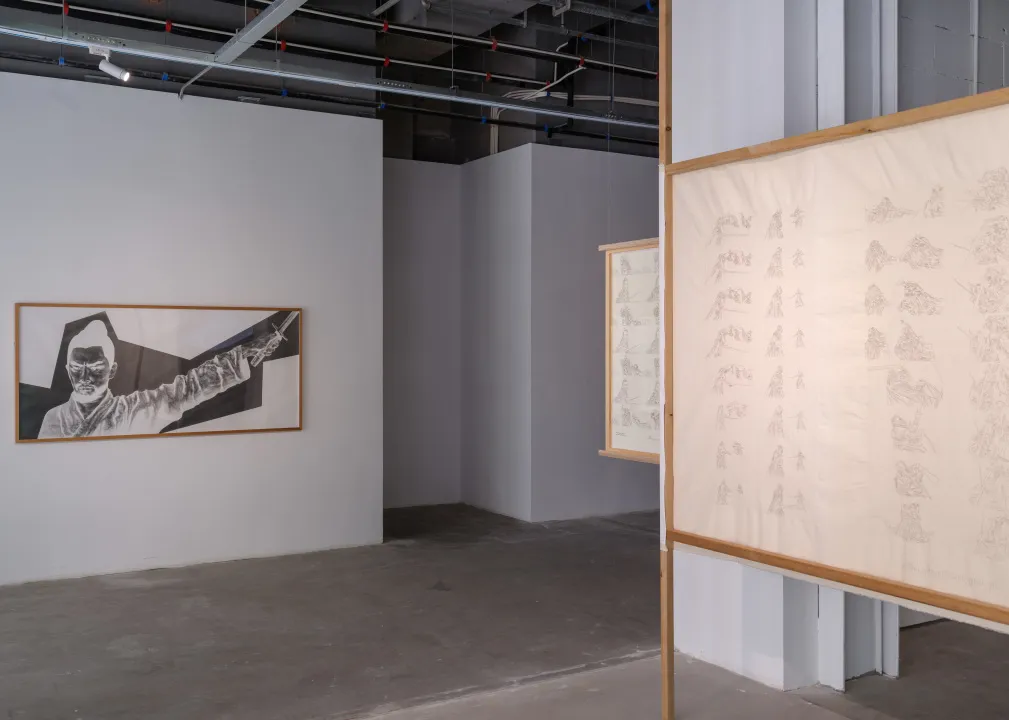
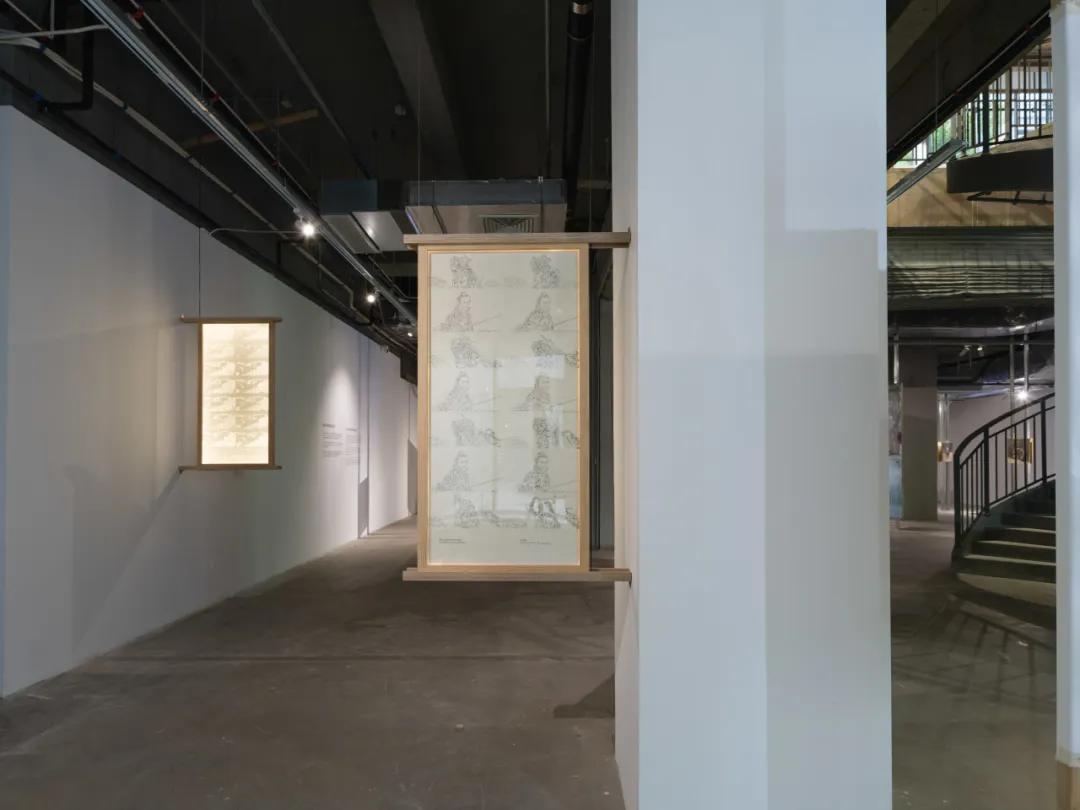
Installation view, The View within the View — Boedi Widjaja: Rivers and Lakes Redux, ShanghART West Bund Central
This “new movement” extends beyond the act of tracing. In Tanpa Bayangan Mu, Boedi repeatedly depicts the one-armed swordsman across the pages of a book modeled after a classical Chinese volume, pairing each image with a melancholic song lyric. As the pages turn, the near-identical illustrations produce a flickering effect, evoking the experience of a child leafing through an old storybook. Accompanying the work is a 41-second video played in reverse, with the pages turning backwards as if time itself were rewinding. The work reflects Boedi’s enduring emotional connection with Bras Basah Complex, also known as the “Book City,” where he briefly reunited with his father during his early visits to Singapore—a place imbued with marks of reunion and parting. Through the interplay of image and text, the work unfolds as a poignant elegy, a farewell not only to a loved one but also to a landscape that lingers in the mind.
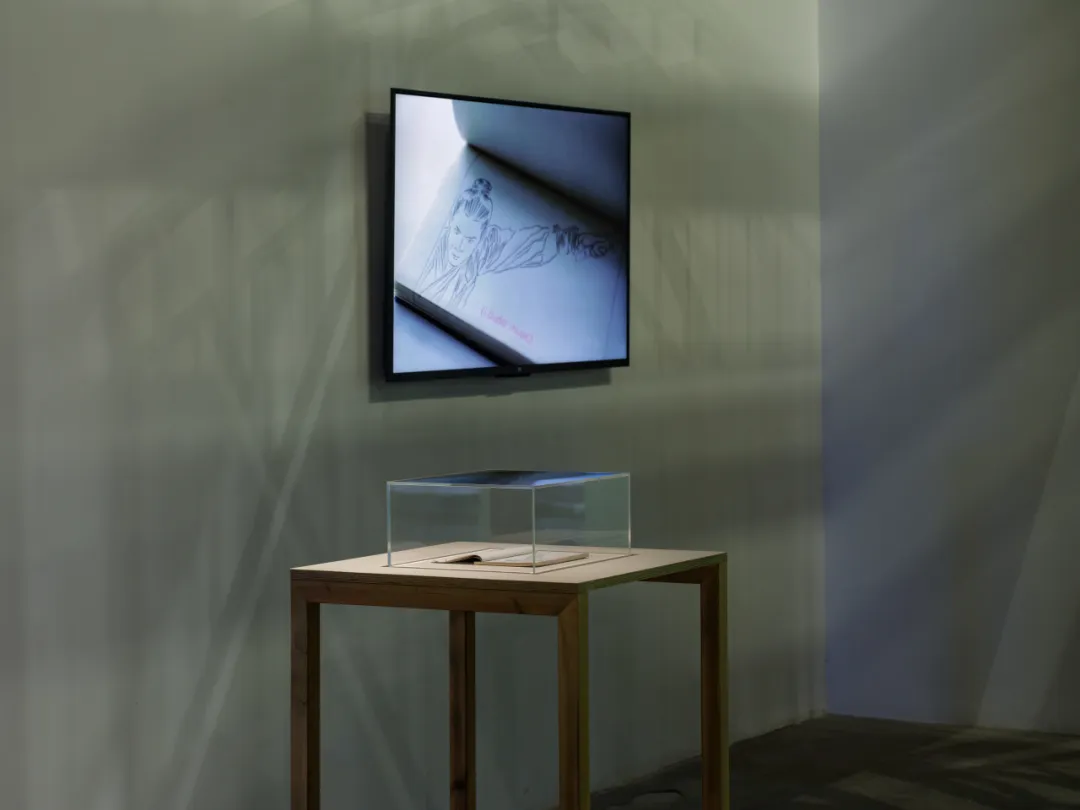
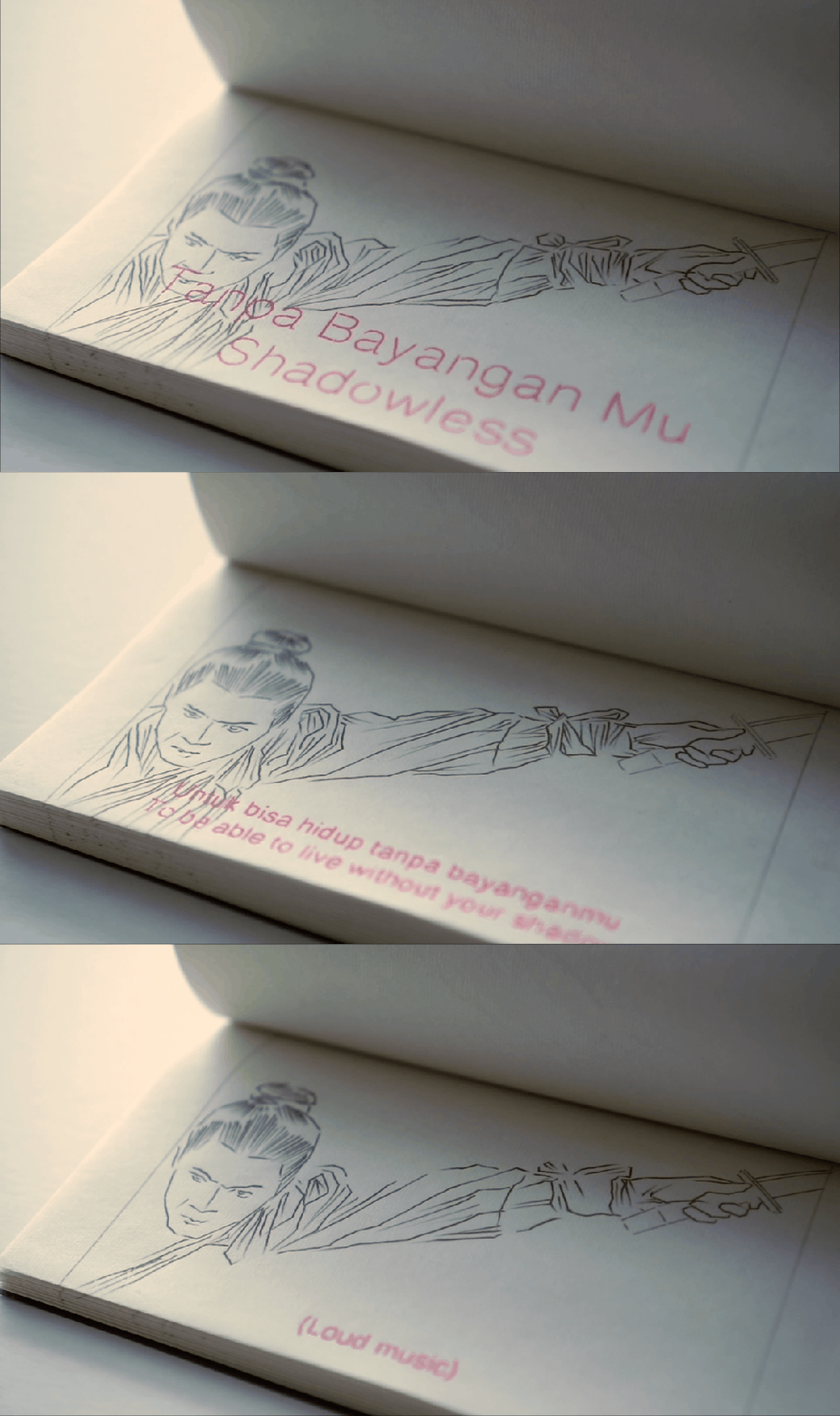
Boedi Widjaja, Tanpa Bayangan Mu (Shadowless), 2020. Moving image, book; graphite on paper, 12.8 (H) × 19.8 × 0.8 cm
Unlike Boedi’s earlier works, which focused primarily on tracing stones, Imaginary Homeland: kang ouw and Tanpa Bayangan Mu turn to wuxia films. In these works, Boedi examines how diasporic communities reconstruct and inhabit memories of their ancestral homelands—recollections of history filtered and reshaped through films, novels, and family stories. In time, these traces become a “memory of absence”: a speculative reconstruction of an imagined homeland, a collective consciousness where fact and imagination intertwine.
In Kang Ouw, this imagination and reconstruction of the homeland are glimpsed through a peep-hole-like perspective. The work, consisting of four-channel video and a single-channel soundtrack, draws on characters, landscapes, and textual fragments from the films Dragon Inn (King Hu, 1967) and New Dragon Gate Inn (Li Huimin & Tsui Hark, 1992). These images are shown through a fractured, voyeuristic lens—flickering, displaced, and constantly recombined into new visual forms. Viewers are guided into a contemplative, scattered gaze, a particular way of seeing that transcends both time and space.

Boedi Widjaja, Kang Ouw, 2022. Four-channel video and single-channel sound, 20′43″. Installation view, The View within the View, ShanghART West Bund Central
Resonating through the space, the soundtrack is drawn from recordings of a century-old set of gamelan instruments that were once housed in the Surakarta Palace in Solo, and later preserved in the Nusantara Museum in Delft, the Netherlands. The soundtrack is mediated via Chinese telegraph code, rendering Li Bai’s poem The Knight-Errant into Morse code and divided into 160 audio segments according to signal duration. The resulting sequence unfolds as an algorithmic rhythm, turning the act of transmitting information into one of listening.
The transmission of information is further explored in 东邪西毒 I Want to Infect You with History, which emerges from Boedi’s long-standing fascination with DNA and biology. In 2019, a New York Times article on epigenetics sparked his investigation into DNA’s potential as a “carrier of information.” The article suggested that trauma can be transmitted across generations through epigenetic mechanisms, prompting Boedi to ask: “What experiences did those before you endure, and how are those experiences inscribed in your body?” Some of the biological materials used in the responsive performance work stem directly from this line of inquiry, linking scientific investigation with artistic exploration.

Boedi Widjaja, Path. 16, 东邪西毒 I Want to Infect You with History, live performance
In the performance Path. 16, 东邪西毒 I Want to Infect You with History, Boedi translates lines of poetry into “visual symbols extracted from DNA codes.” During the interactive performance, DNA-infused mist is released from a large outdoor metal wall inscribed with “Infect History.” Viewers are invited to interact with the mist, using test strips to produce DNA images derived from contact with the solution. As the test strip develops, patterns emerge, revealing Boedi’s encoded poems. The process dissolves the line between biological and cultural inheritance: history comes alive as a mutable force, “infecting” bodies, language, and family stories, carrying its vitality and contagious force.
Path. 16,东邪西毒 I Want to Infect You with History was first presented by Boedi in 2025 as a hybrid performance and lecture at Fotografiska Shanghai. The work is structured around a dialogue between the artist and a sound-and-image character named “Life Cell DX/XD.” Its content draws from multiple sources: archival fragments documenting the Chinese diaspora during the Cold War, excerpts from letters by Indonesian writer Pramoedya Ananta Toer, and oral histories from Boedi’s own family.
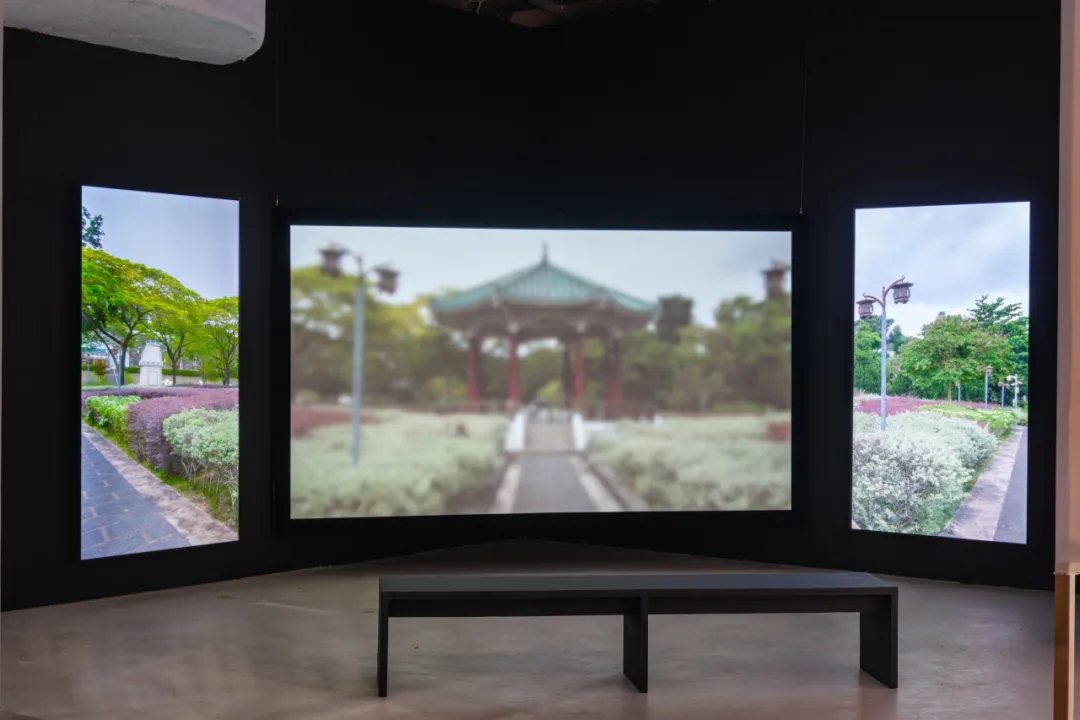
Boedi Widjaja, 东邪西毒 I Want to Infect You with History, 2025. Three-channel video, synthetic DNA, text art, misting system, aerosol cans and metal briefcase, 31′26″. Installation view, The View within the View, ShanghART West Bund Central
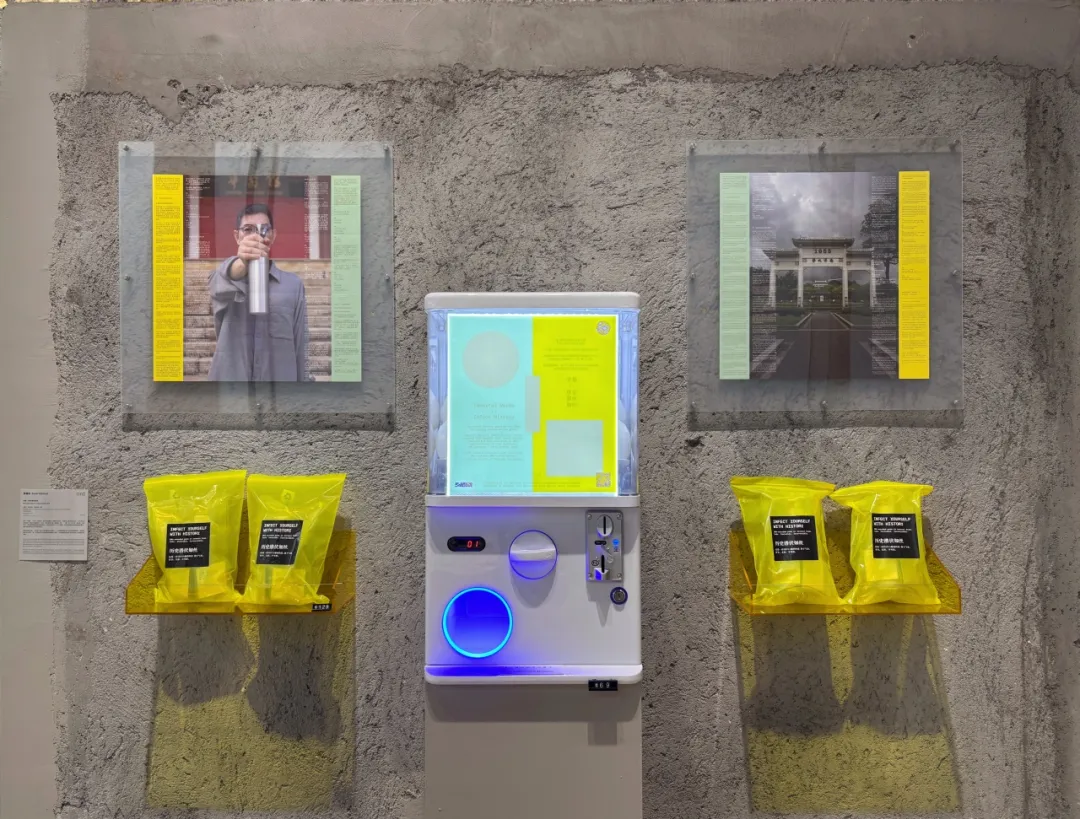
Boedi Widjaja, 字基:历史潜伏如丝, 2025. Gumball machine, screen video, portable oil drum, steel frame, 68 (H) × 38 × 51 cm
Humid river air, pavilions quietly preserved on a campus, the cold white gleam and mechanical hum of a laboratory, the dark stains tracing moisture on a bedroom’s walls… These details do not appear as symbols, but as spaces that exist in the present, embodying memory within them. Their familiarity becomes the very foundation of the work’s narrative, grounding diasporic experience, family history, and the inevitable loss of language in tangible, lived experiences.
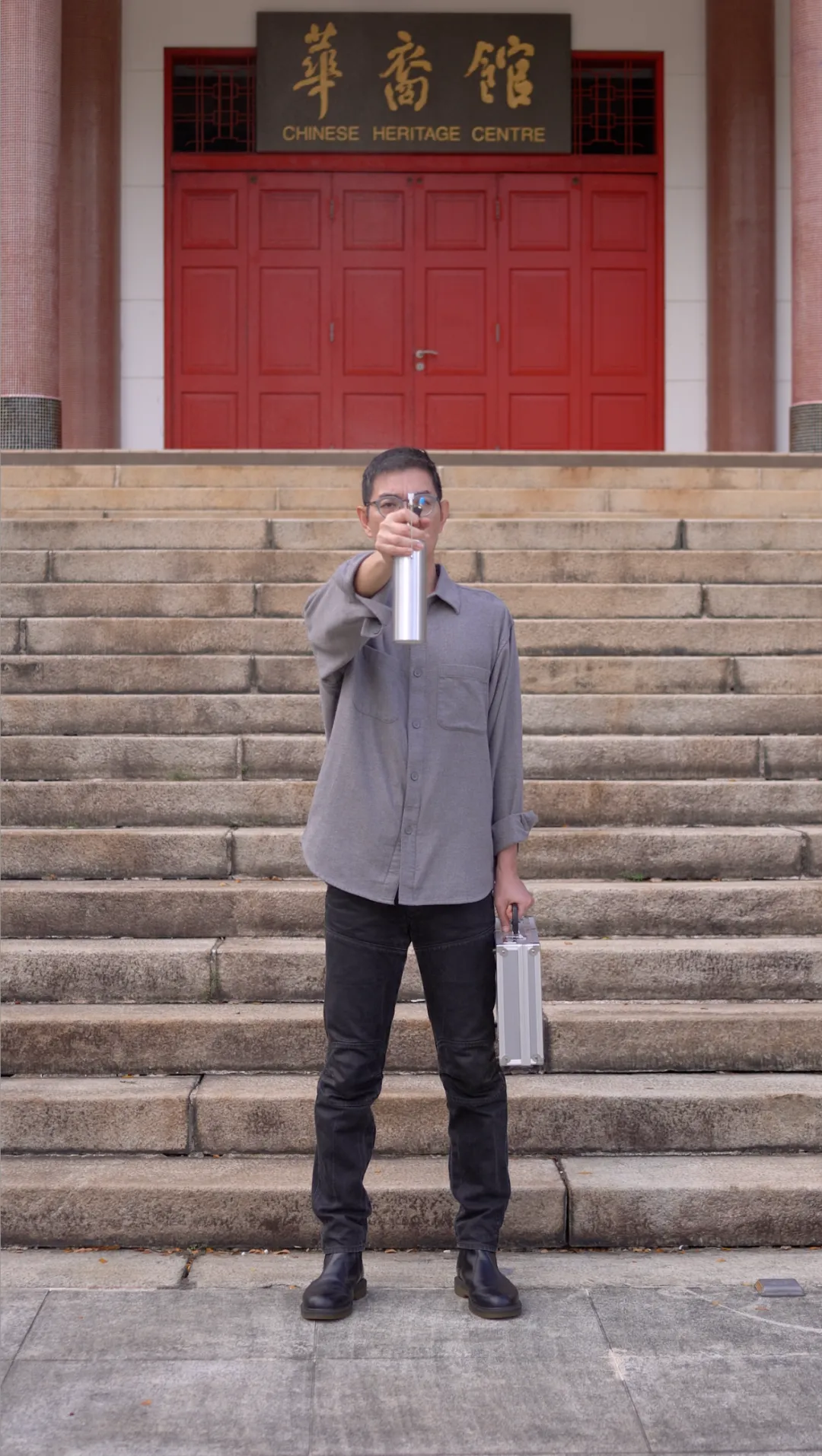
Still from 东邪西毒 I Want to Infect You with History
Fragments of Chinese political migrations during the Cold War, Pramoedya Ananta Toer’s censored writings and exile, and the history of the artist’s family in Java enter the work in glimpses rather than as a unified narrative. These materials are presented in their original forms—letters, video recordings, landscapes, and oral testimonies—never transformed into allegory or a polished story. In this way, viewers encounter concrete words and places directly, experiencing the raw textures of history rather than a mediated account.
The work also responds to the changes in which we experience space over the past three years. Boedi noted that since 2020, his perception of “mobility” has been profoundly altered: limitations on physical travel and the widespread use of Zoom have reshaped the very way we experience and inhabit space. In the work, this shift unfolds through sudden spatial leaps and fractured narratives—carrying the viewer from the cold light of a laboratory to the humid riverbank in an instant, then from the quiet arches of an old campus to the intimate corners of a homely bedroom in the next. These transitions do not construct a linear story; instead, they trace the lived layering of spaces, capturing the textures and rhythms of contemporary life as it is experienced, remembered, and imagined.
In Rivers and Lakes Redux, Boedi Widjaja presents a distant yet present web of connections—the inheritance and contagion of viruses and genes, the fluid currents of Jianghu virtues, and the shifting tides of diasporic identity. Through the lens of “absence,” he attends to diasporic experience with careful, contemplative precision, allowing it to unfold across multiple mediums. These experiences take on forms that can be seen, felt, and deeply inhabited. Rather than pointing simply to history, longing, geopolitics, or family memory, this presentation emerges from diasporic experience as a richly imaginative sensibility, dwelling in the liminal spaces between translation and language, moving across the dislocations of culture, and lingering in the echoes of misremembered histories.
More installation views
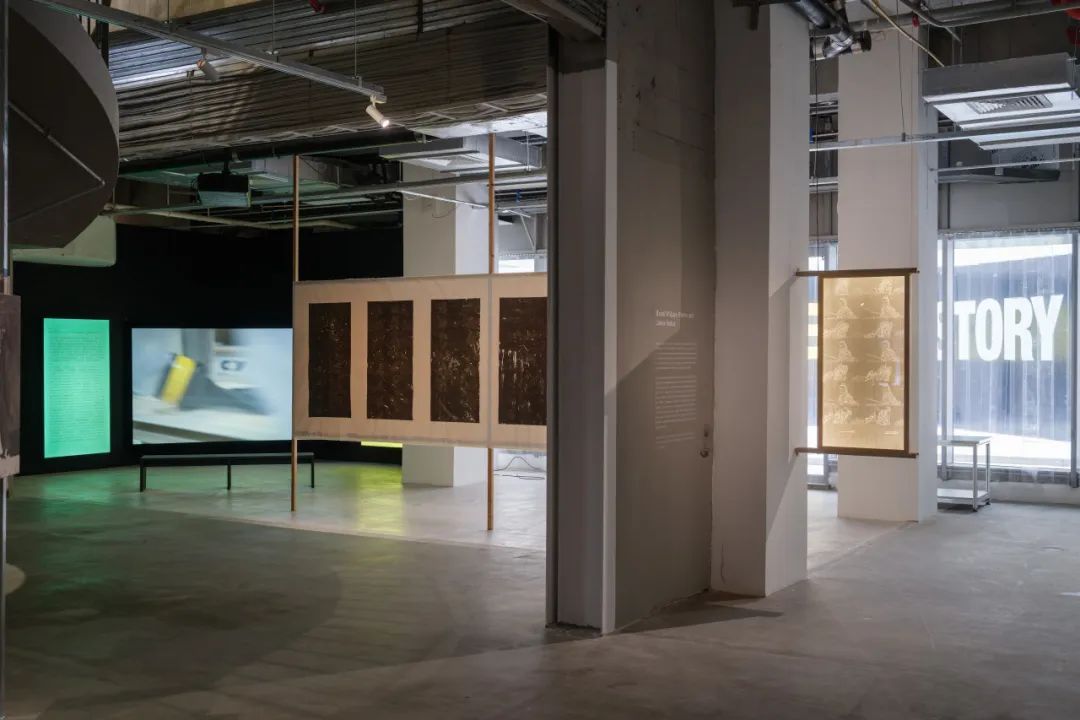
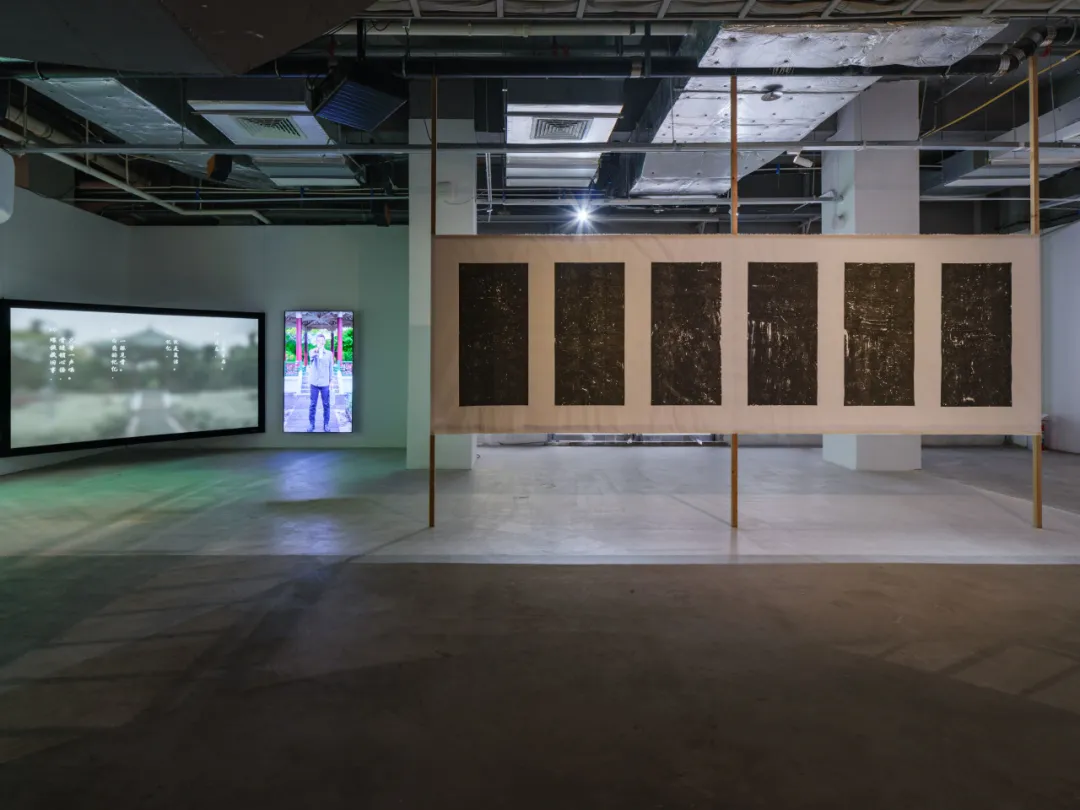
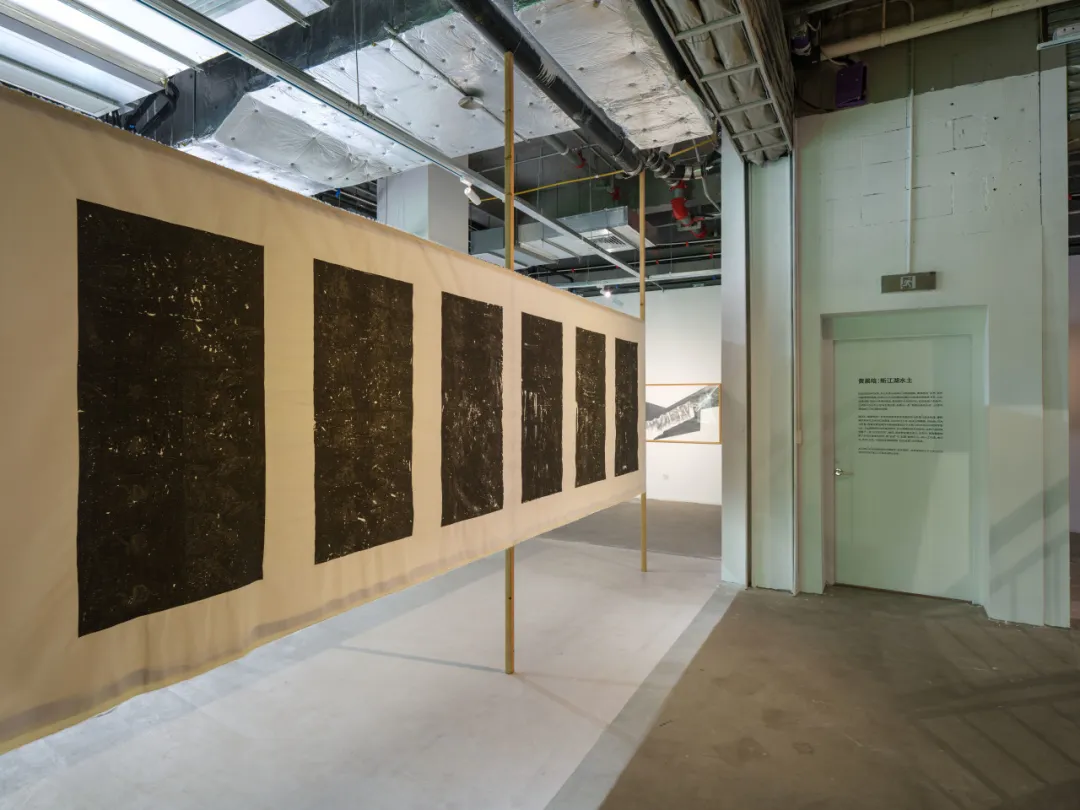
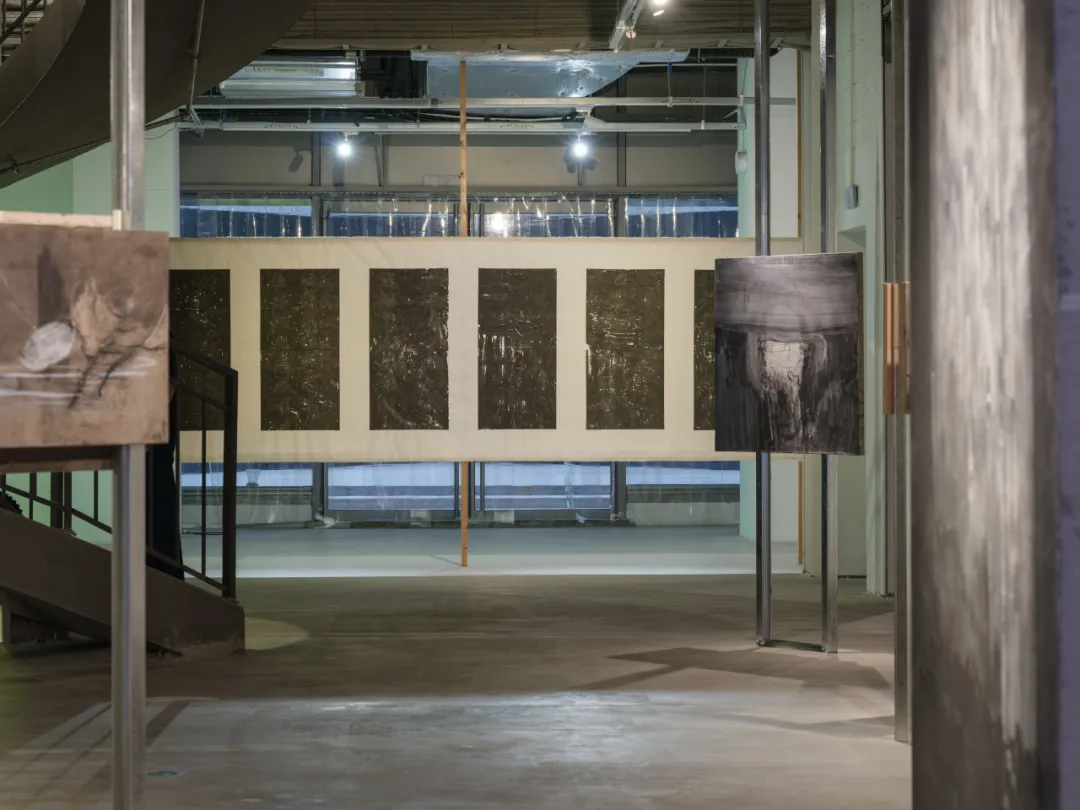
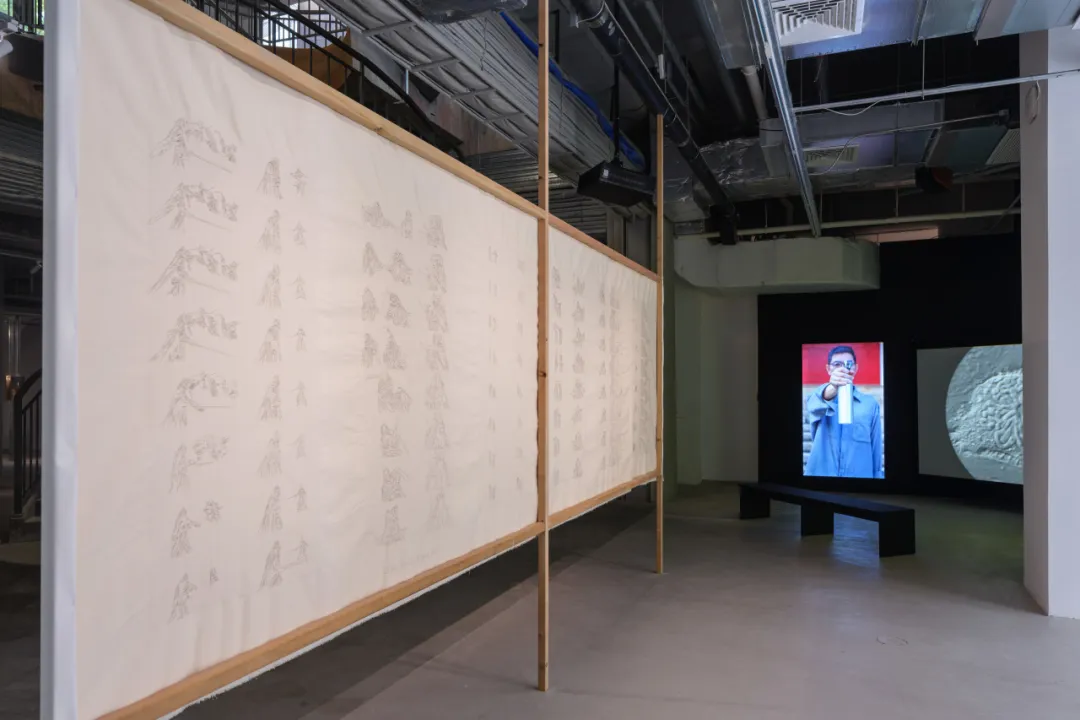
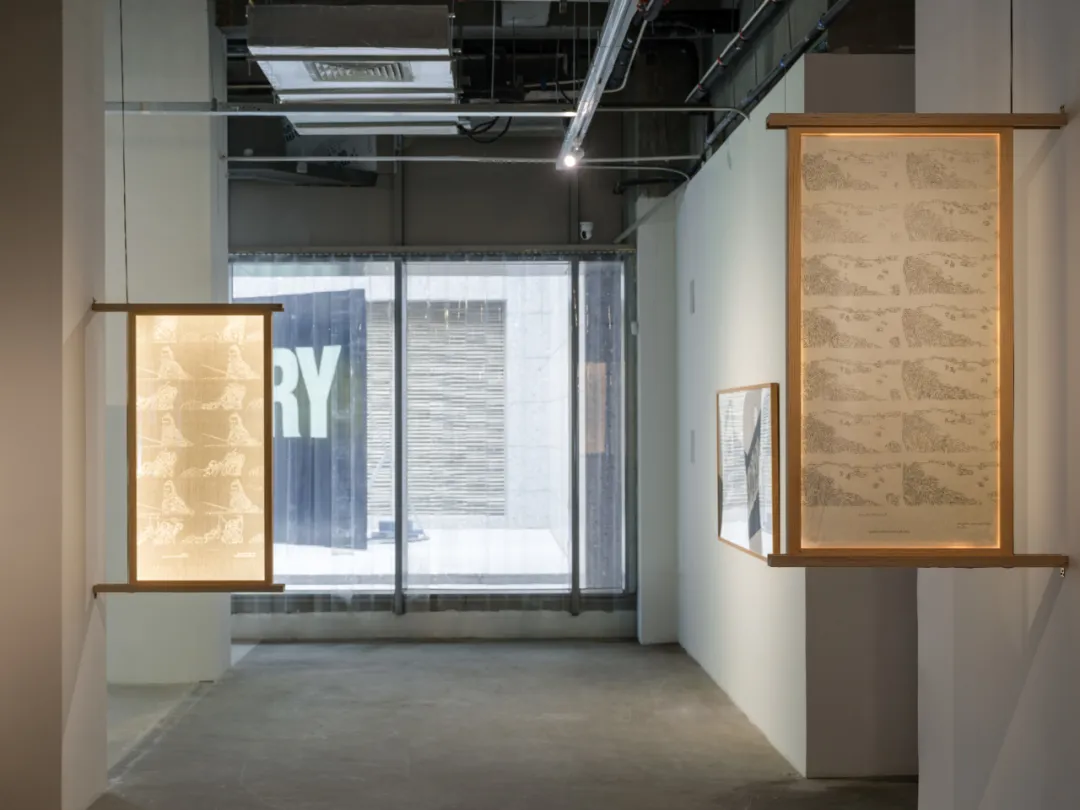
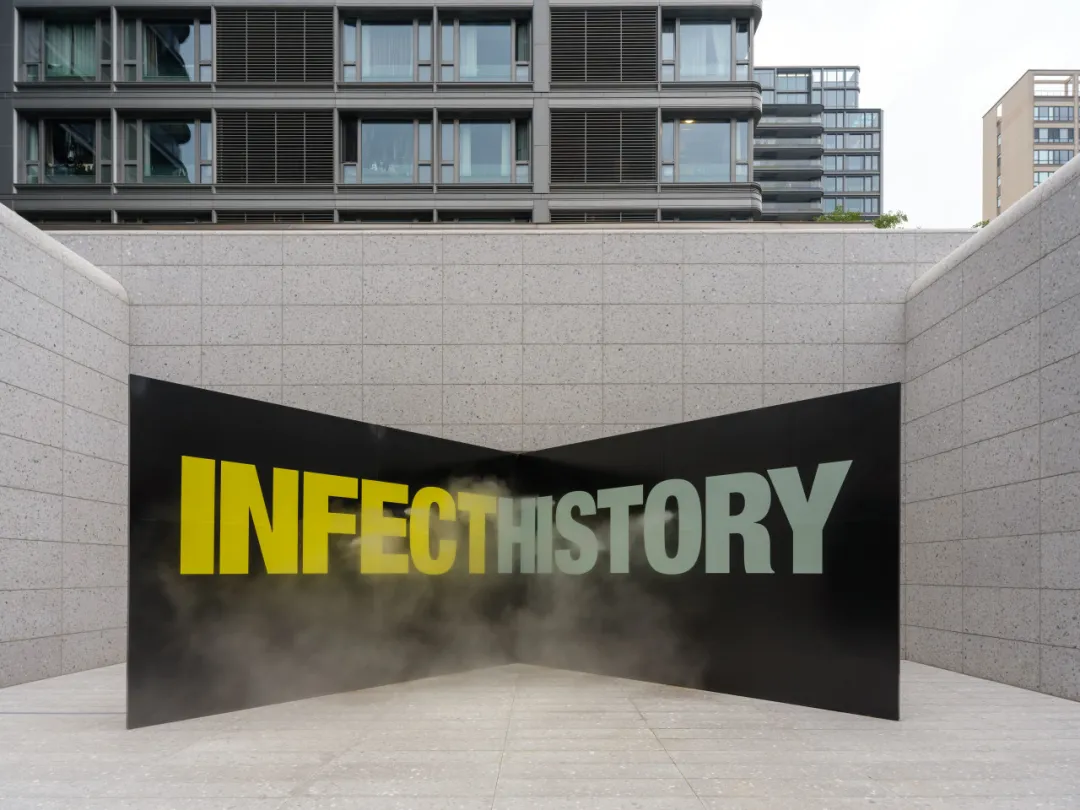
Installation views, The View within the View — Boedi Widjaja: Rivers and Lakes Redux, ShanghART West Bund Central